

Residential Well Drilling
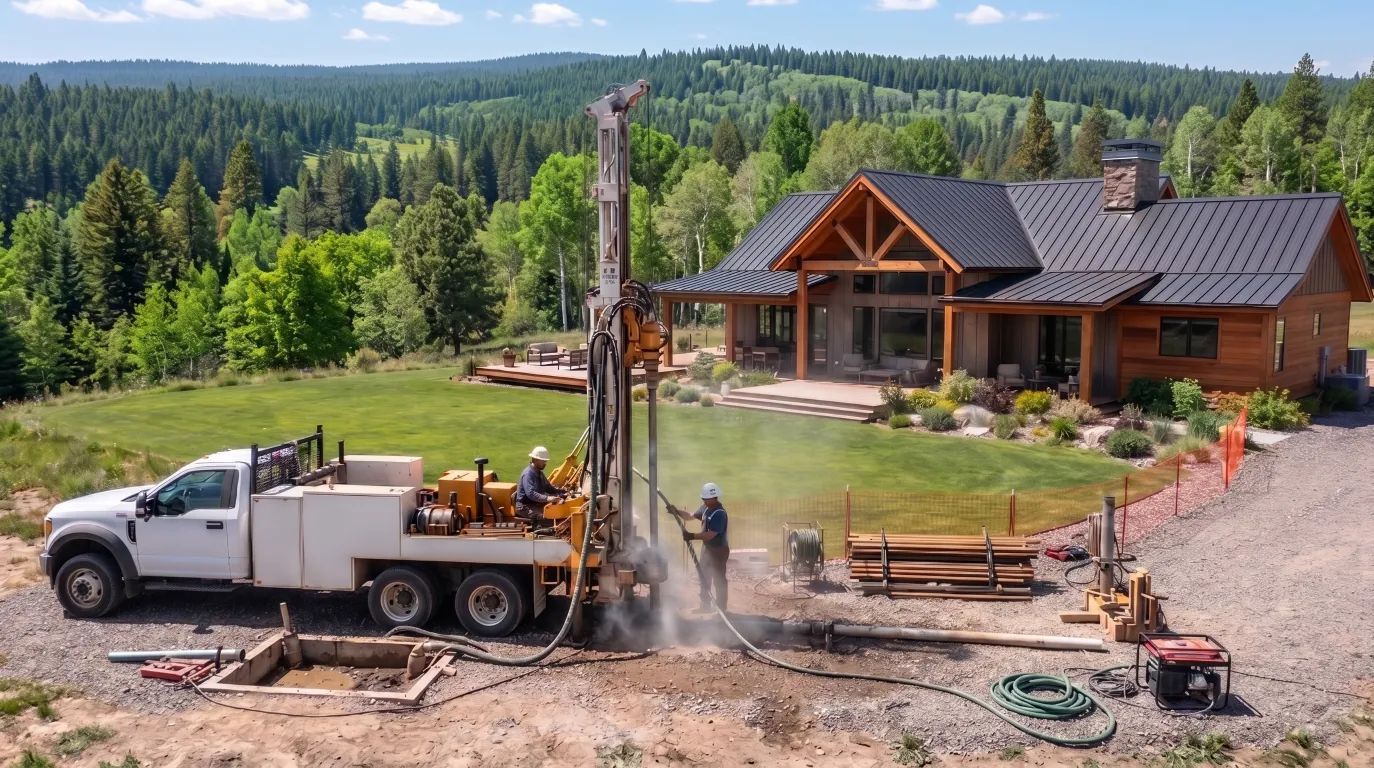
Planning a rural home build or replacing an aging domestic well? We engineer and drill turnkey 140–180 ft residential water wells across Lubbock, Wolfforth, and Shallowater designed for continuous household pressure and lifetime durability in the Ogallala.
100% legal surface sanitary seals and setback validation.
140–180 ft bores optimized through South Plains sands.
Goulds submersible motors and drawdown pressure tanks.
Planning a Rural Build or Replacing a Dead Home Well?
To generate an accurate estimate, please have your parcel location, acreage size, and expected household GPM requirements ready for our engineering team.
Request Drilling Consultation
Enter your parcel location and household acreage to discuss borehole layout and schedule an on-site consultation.
Site Selection and TDLR Regulatory Setbacks
Laying out a new private well on a 1- to 5-acre rural tract in Wolfforth or Shallowater demands strict adherence to state groundwater regulations before the drill bit ever touches the dirt. You cannot simply drop a wellhead wherever it looks convenient near the house foundation. The Texas Department of Licensing and Regulation (TDLR) mandates a hard 100-foot minimum setback from any active or proposed septic spray fields, leach lines, drain fields, or aerobic treatment tanks. Furthermore, the borehole must be spudded at least 50 feet away from all adjacent property lines.
On narrower rectangular lots common in the rural Levelland corridors, threading the needle between your septic system, your neighbor’s septic field, and your home footprint requires precise site geometry. We shoot these elevations and physically measure the setbacks during our initial walk-through so your home well installation is fully legal and physically protected from biological cross-contamination. Locating the rig access path is equally critical. Our truck-mounted rotary rigs require wide gate clearances, solid ground devoid of deep mud or soft caliche, and zero overhead powerline obstructions to safely raise the heavy mast.
Penetrating the Ogallala: Borehole and Casing Specifications
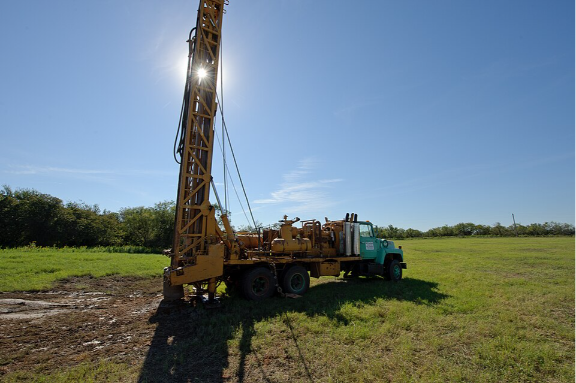
The standard residential water well drilling Lubbock profile targets the saturated sands and gravels of the Ogallala Aquifer. For domestic use across our primary service areas, we typically run the drill string down to a total depth of 140 to 180 feet, depending strictly on the localized water table decline and the depth to the restrictive bedrock floor.
We utilize mud rotary drilling techniques to penetrate the dense caliche caprock common to the High Plains. We circulate a highly viscous bentonite clay fluid down the hollow drill pipe, through the bit nozzles, and back up the annulus. This heavy mud stabilizes the unconsolidated sand layers, preventing the raw dirt walls from collapsing inward while lifting the heavy drill cuttings to the surface mud pit. Once the bit reaches the target total depth and we fully condition the borehole to remove suspended solids, we trip out the heavy steel drill pipe and immediately begin setting the permanent casing string.
We exclusively run high-grade 4-inch PVC well casing for residential applications. To ensure structural integrity against lateral soil pressure, we utilize heavy-wall SDR-17 or Schedule 40 PVC. Joining these casing joints requires meticulous chemical welding. We chamfer the pipe edges, apply aggressive purple primer, and coat the bell and spigot with industrial-grade heavy PVC cement. The crew holds each joint firmly in compression for exactly one minute to prevent the chemical reaction from pushing the connection apart. A failed glue joint a hundred feet underground allows sand to permanently destroy the well.
Standard Residential Well Specifications
| Component | Specification Standard | Purpose / Application |
|---|---|---|
| Borehole Diameter | 6.75 to 8.75 inches | Accommodates casing and requires annular space for the gravel envelope. |
| Target Depth | 140 – 180 feet | Reaches the productive saturated thickness of the local Ogallala Aquifer. |
| Casing Material | 4-inch SDR-17 or Sch 40 PVC | Provides rigid structural support and resists long-term soil compression. |
| Screen Slot Size | 0.010 or 0.020 inch cuts | Filters out native aquifer sand while allowing free groundwater inflow. |
| Filter Pack | Graded washed silica sand | Surrounds the well screen to prevent fine silt migration into the casing. |
Call (806) 581-0630 for Immediate Dispatch — Turnkey Domestic Well Contracting
Direct Lubbock County rig dispatch and site consultations.
Gravel Packing and Well Screen Installation
The bottom 20 to 40 feet of your PVC casing string consists of factory-slotted well screens. These fine, horizontal cuts are the only entry points for groundwater to flow into the internal casing chamber. However, placing a naked plastic screen directly against the native Ogallala sands guarantees a clogged system and destroyed pump impellers.
To bridge the gap between the formation and the casing, we pour a carefully calibrated gravel pack envelope down the annulus—the open void between the outside of the PVC pipe and the raw dirt wall of the borehole. We utilize specifically sized, washed silica sand that matches the exact slot size of the PVC screen. As the crew slowly pours the gravel from the surface, we constantly run a weighted tag line down the hole to measure the depth of the sand. This manual measurement ensures the gravel does not "bridge" or jam partway down the column, which would leave the lower screens exposed to raw dirt. This gravel pack acts as the primary mechanical filter. It permanently stabilizes the collapsing sand formations and creates a highly permeable, high-flow jacket around the intake screen, maximizing the well's specific capacity.
Well Development and Surface Sealing Mechanics
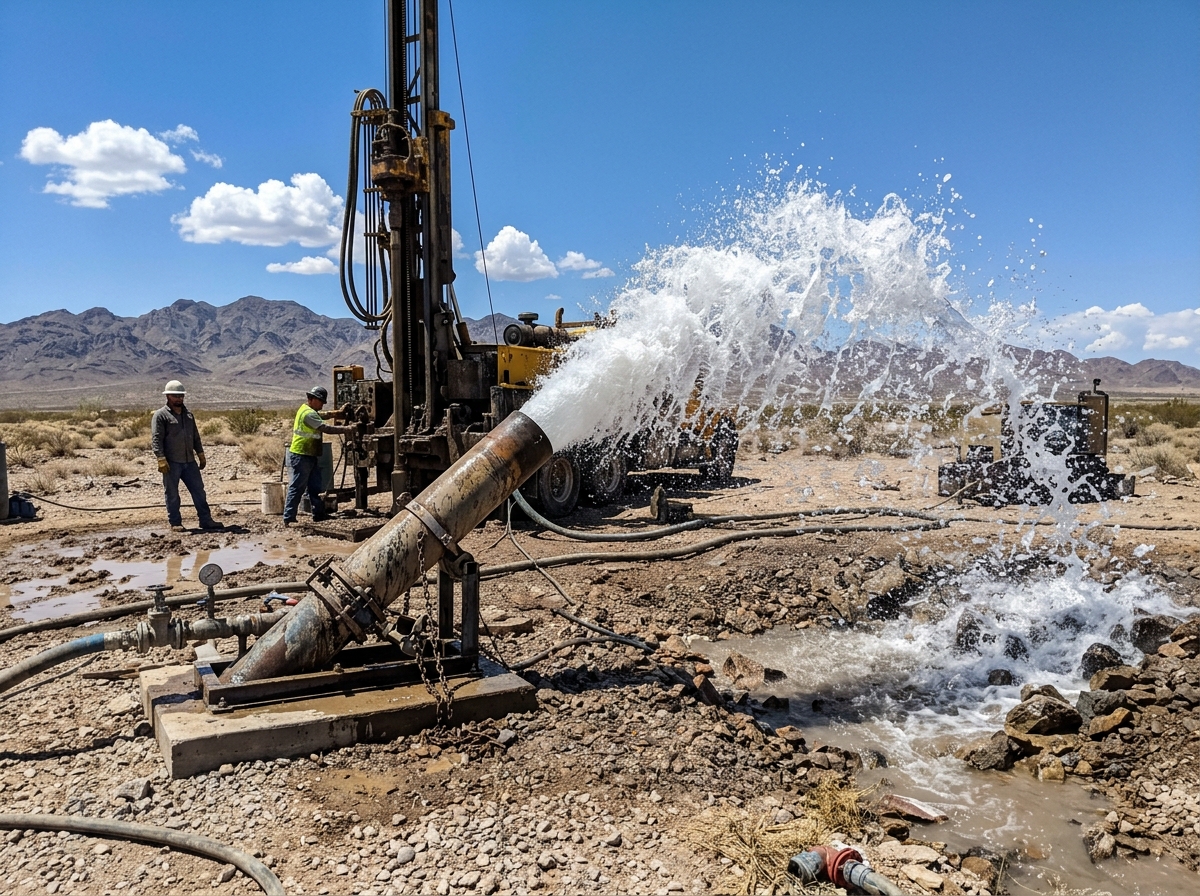
Drilling mud heavily smears against the borehole wall during the active rotary process, effectively blinding off the water-bearing aquifer. Before we can lower a permanent pump into the casing, we must aggressively develop the new well. We lower a high-pressure airline deep into the water column and blast massive volumes of compressed air into the casing.
This violent surging action forcefully lifts the heavy sediment, pushes the fresh gravel pack tightly against the formation walls, and blows the turbid, mud-laden water out the top of the wellhead. We continue airlifting and surging the system for hours until the discharge water runs perfectly clear and free of suspended sand. Skipping or rushing the development phase leaves residual drilling mud trapped in the formation, severely crippling the total yield of the well.
Following mechanical development, we construct the mandatory sanitary surface seal to protect the groundwater from surface contamination. We pump a dense sodium bentonite clay grout into the upper annular space surrounding the casing. This creates an impermeable vertical barrier that blocks agricultural runoff and rainwater from channeling down the outside of the pipe. Finally, we form and pour a TDLR-mandated 4-inch thick concrete pad directly around the exposed wellhead. This pad must physically extend outward a minimum of two feet in all directions from the center of the casing and must feature a continuous downward slope to permanently shed standing water away from your drinking supply.

Designing Turnkey Domestic Well Systems
A completed borehole requires a heavily engineered pumping system to push water into your home plumbing. We build complete, turnkey domestic well systems calculated specifically for your household's peak water demand. A sprawling four-bathroom custom home on three acres requires significantly more gallons per minute (GPM) than a standard two-bedroom rural cabin.
We begin by calculating the Total Dynamic Head (TDH), factoring in the static water level, the vertical lift required to reach the surface, and the friction loss generated by pushing water through hundreds of feet of 1-inch or 1.25-inch poly pipe trenching. Based on the calculated TDH and your required GPM, we select the exact horsepower and wet-end stage count of the submersible pump. We calculate the required wire gauge size to prevent excessive voltage drop between the home breaker panel and the distant wellhead. Finally, we install commercial-grade, deep-drawn steel pressure tanks sized to provide massive drawdown capacity, preventing the new submersible motor from aggressively short-cycling every time a kitchen faucet is opened. We handle the entire process from the initial drill site selection to the final wiring of the control box, delivering a fully pressurized, high-yield private water system.
Schedule Your Lubbock Area Drilling Assessment
Talk to our master well drilling specialists about your property setbacks, estimated borehole depth, and turnkey pressure pump package.